Renewable Energy · Climate Action · Rural Development
Pakistan's oil and LNG imports place an estimated USD 20 billion annual burden on the country's foreign exchange reserves. At the same time the Punjab, home to 57% of Pakistan's national livestock sector, produces roughly 490,000 tonnes of animal dung every single day, the overwhelming majority of which is simply discarded.
The Punjab Biomass Initiative, run by the Energy Department of the Government of the Punjab and executed by Punjab Power Development Company Limited (PPDCL), exists to close that gap. It requires no new feedstock, only the infrastructure to use what the province already produces.
Each pillar addresses a different scale of livestock keeping, from a family with five animals to a notified cattle colony with tens of thousands.
Large-scale commercial plants at notified cattle colonies and markets, supplying biomethane to industry and carrying private investment.
Read More550 village-scale plants across 25 districts, providing shared cooking gas to 110,000 households.
Read More45,000 household digesters across all 37 districts, prioritising the most vulnerable households first.
Read MoreGovernment technical expertise for 2,000 registered farms building their own plants, at no direct capital cost to government.
Read MoreThe rollout is not starting from theory. Three projects are delivered and operating, and each one shaped how the wider programme is designed.
Delivered & Operational
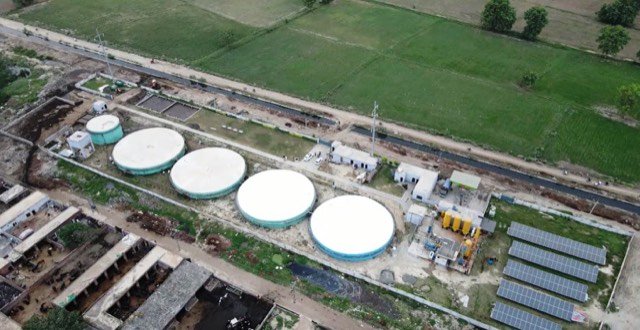
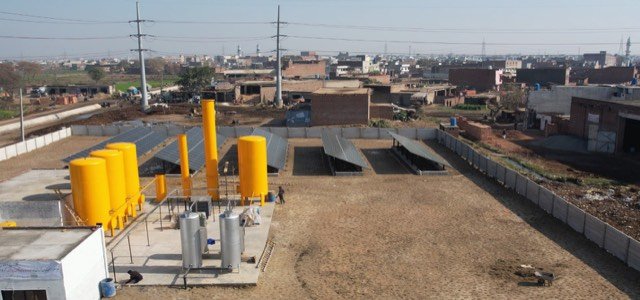
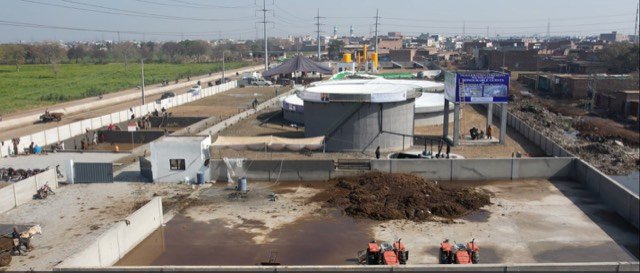
Pakistan's first commercial-scale biogas plant. 12,000 m³, processing 160 tons of manure a day. Commissioned March 2026.
View ProjectDelivered & Operational
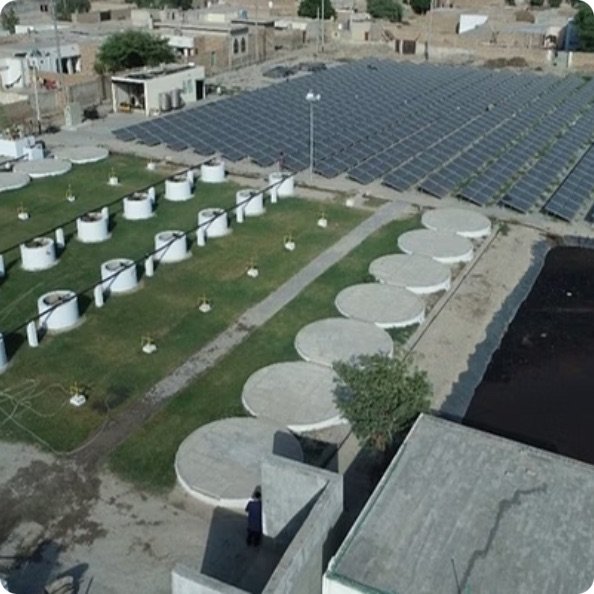
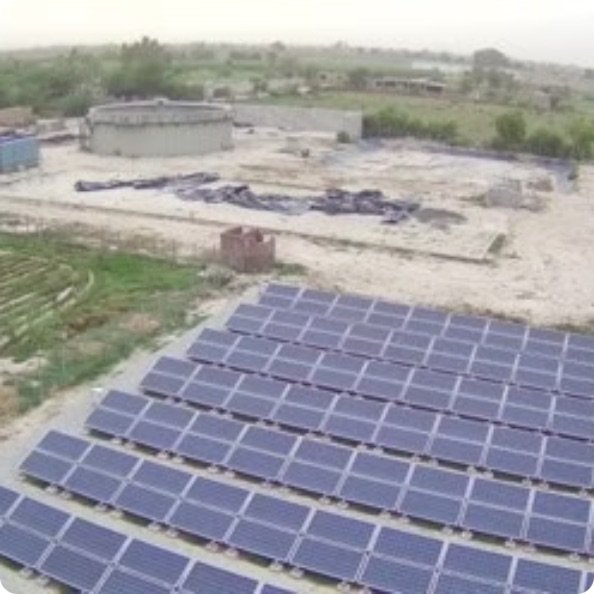
Two village-scale plants at Samundari and Vehari, each serving 300 households with cooking gas.
View ProjectDelivered & Operational
1,314 digesters of 8 m³ each, delivered to rural households across 11 districts and fully government funded.
View ProjectAnaerobic digestion is a proven, internationally established technology. The same principle scales from an 8 m³ household tank to a 12,000 m³ commercial reactor.

Manure is collected from dairy farms and households, removing it from roadsides and drains.
The manure is fed into a sealed digester through a controlled intake.
Inside the digester, organic material breaks down without oxygen, producing raw biogas.
At commercial scale, raw biogas is purified and compressed into fuel-grade gas.
The gas is used for cooking or supplied to industry; the digested slurry becomes organic fertiliser.
A cleaner environment, a stronger economy and healthier communities.
Pakistan's first commercial-scale biogas plant was formally commissioned, and its operation and maintenance contract awarded. Fuel-grade gas is now supplied to nearby industry through cylinder cascades.
The plant's second phase was completed, doubling capacity from 6,000 m³ to 12,000 m³ and raising daily manure intake from 80 to 160 tons.
Construction of the initial 6,000 m³ plant was completed, producing 4,000 m³ of raw biogas and 1,600 kg of biomethane a day.
The Energy Department through PPDCL invites households, village organisations, dairy farm owners, investors and technology partners to take part in the Punjab Biomass Initiative.
Register Your Interest